

Caribbean nations seek reparations for the evils of transatlantic slavery. What might be the specifically Christian understanding? Roger Dunsdon considers.
Past evils, present implications
There can be little doubt that the transatlantic slave trade and its aftermath left many former slaves in a forlorn and forsaken condition. Whilst the lot of all humankind has transformed since the Nineteenth century through the global rise of living standards, yet still today those impacted by industrial-level chattel slavery have remained amongst the poorer on this planet, and ambitions to close the social progress gap with the industrially developed world seem permanently frustrated.
Is anyone today to blame, and is ‘restitution’ required? What does a specific Christian understanding bring to this fraught debate?
Brief summary of Transatlantic slave ‘trade’
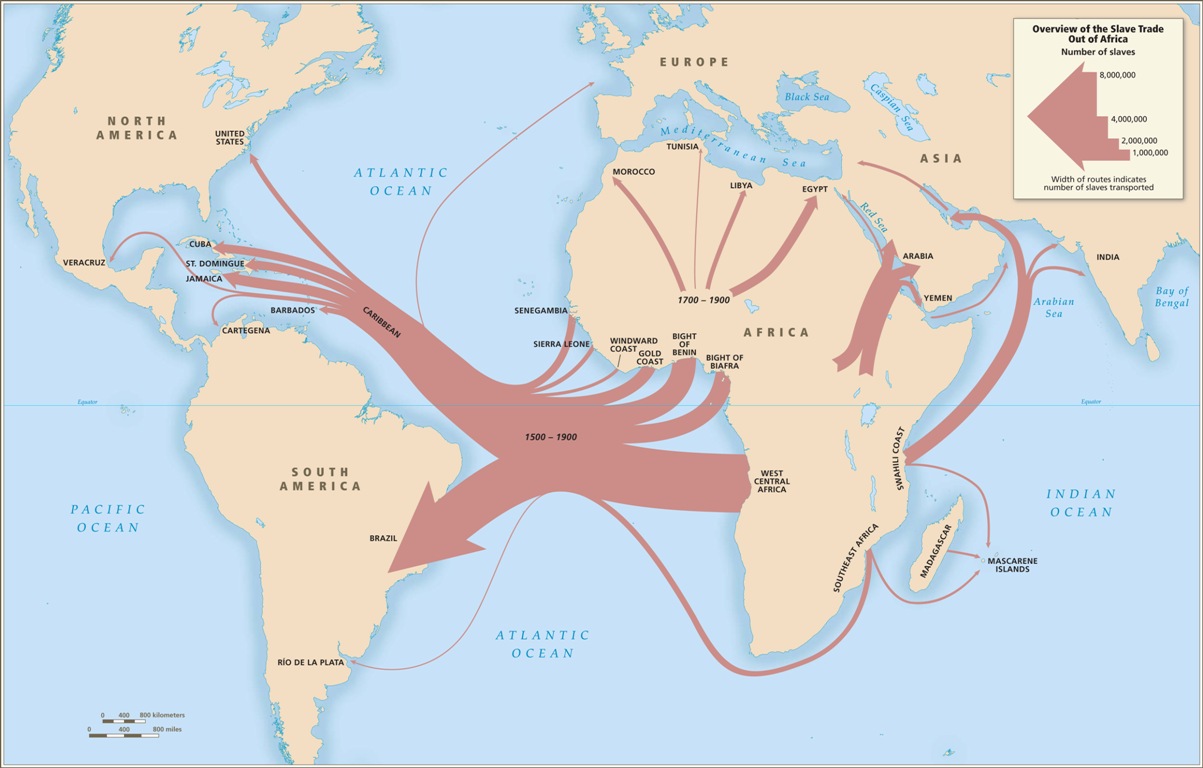
The transatlantic slave ‘trade’ was carried out by various European countries during approximately the period 1500 to 1800 although it continued at a low level until the end of the American civil war. Up to 12.5M enslaved were to cross the Atlantic in this manner heading first for South, and then additionally to North America. Central/West Africa were primary ‘supplier’ nations, and the moral culpability of Africans themselves remains to this day a controversial subject. Perhaps we should never lose sight of the fact there were suppliers (mainly African) and buyers-users (mainly American, North and South) with ‘traders’ acting as classical “middle men” – mainly Europeans.
The transatlantic trade reached its zenith in the late eighteenth century. Britain sought to interdict slave ships from 1807, via its West Africa Squadron, a job it continued to undertake until 1867 after which the residual task was undertaken through other naval arrangements. It is reckoned that The West Africa Squadron seized approximately 1,600 slave ships and freed 150,000 slaves aboard these vessels between 1807 and 1860. Some historians have declared the Squadron the most expensive international moral action in history, but others defame the Unit. Like everything else in history, the truth is debated, perhaps increasingly so; yesterday’s ‘history’ can so often become contaminated with today’s controversies and changing social mores. https://en.wikipedia.org/wiki/West_Africa_Squadron
This map, which is worth studying, indicates the ‘size’ and ‘trajectory’ of the African slave trade (that is, trading from Africa) during the relevant years :https://www.un.org/sites/un2.un.org/files/2019/12/slave_trade_map_large.jpg
Does the Bible ‘support’ slavery?
The short answer is no, it does not. And everything we learn in Scripture about the nature of God indicates that slavery has always been wrong in absolute terms. But the Bible does recognize the reality of slavery and within the Hebrew/Jewish context there were Biblical laws ameliorating the lot of slaves (see e.g. The Baker Encyclopedia of The Bible pages 1971-72 for a full treatment).
Beware of any commentator who says that the Bible supports slavery! Such a commentator is either lying, because it does not, or is profoundly adrift of reality. It has been suggested that in the first century Roman Empire, perhaps 50% of people were ‘slaves’ of one sort or another.
It must equally be said, however, that neither Jesus not the Apostles commented on slavery, except insofar as Christian slaves should serve their masters faithfully, and masters should treat their slaves humanely and fairly (Ephesians 6:9; Colossians 4:1; 1 Timothy 6:2; Philemon 16). It might be added that Jesus nowhere commented on crucifixion, nor campaigned for its ending. We have to recognize that the World was then, as it remains today, a fallen World and accordingly one where profound injustices and evils occur daily. It is not (necessarily) the task of Christians to campaign endlessly to overthrow injustices, for if we did we should be diverted from our primary task (our ‘prime directive’, if you prefer) to preach the good news of the Kingdom.
Does the Bible indicate responsibility of heirs for moral actions of ancestors?
The Bible addresses the concept of responsibility for the actions of ancestors in various passages, emphasizing personal accountability over collective guilt:
- Individual Responsibility: Ezekiel 18:20 states, “The soul who sins is the one who will die. The child will not share the guilt of the parent, nor will the parent share the guilt of the child.” This suggests that individuals are responsible for their own actions rather than being held accountable for the sins of their ancestors.
- Generational Consequences: While individuals are not punished for their ancestors’ sins, there are mentions of the consequences of sin affecting future generations. For example, Exodus 20:5 discusses God visiting the iniquity of the fathers upon the children. But this is usually understood as a reflection of the impact of sin rather than a direct punishment.
- Repentance and Restoration: The Bible encourages repentance and personal relationship with God. In instances where a community or nation has sinned, individuals are called to repent and seek restoration (2 Chronicles 7:14).
- Legacy of Faith: The Bible also highlights the importance of a faithful legacy. For example, Paul speaks of Timothy’s faith being passed down from his grandmother Lois and mother Eunice (2 Timothy 1:5), illustrating the positive influence of ancestors.
Scripture emphasizes that each person is accountable for their own actions, while recognizing that the consequences of those actions can ripple through generations. The focus is on personal faith and responsibility rather than collective guilt. The specific question in John chapter 9 where the Disciples ask Jesus “did this man sin, or his parents?” was met with the clear answer from the Lord Jesus, that neither had sinned! So, intergenerational culpability seems to be, as it were, ‘outlawed’ in God’s approach. We are – and always will be -accountable for our own sins, but not those of our parents.
What does the Bible teach on ‘Restitution’?
In Scripture, the concept of restitution is addressed in several passages, particularly in the context of justice and making amends for wrongs. Some examples:
- Exodus 22:1-4: specific guidelines for restitution in cases of theft or damage. If someone steals livestock, they are required to repay multiple times the value of what was taken.
- Leviticus 6:1-5: emphasizes the importance of confessing a wrong and making restitution, not just to God but also to the victim. If someone deceives another, they must return what was taken plus a fifth of its value.
- Numbers 5:5-7: the Israelites are instructed to confess their sins and make restitution to those they have wronged, demonstrating the principle that wrongdoing must be addressed directly with the affected party.
- Zacchaeus in Luke 19:8: In the New Testament, Zacchaeus promises to repay fourfold to anyone he has defrauded, reflecting the spirit of restitution and repentance.
Overall, the Bible presents restitution as a crucial step in seeking justice and restoring relationships after a wrong has been committed. It emphasizes both the importance of acknowledging one’s wrongs and taking practical steps to correct them. In all these cases, however, the restitution is in the terms of living relationships, people who have directly wronged a contemporary or a neighbour, are the ones required to make restitution.
Are we today bound by these largely Old Testament concepts? That raises a host of supplementary questions we do not have time for here. But the generic view is taken amongst many Christians that Old Testament laws provide plain indications about what is important from God’s perspective, but such laws do not apply ‘to the letter’ to modern Christians who are blessed to live under the New Covenant (summarised in the one word, ‘grace’). Grace, of course, intimates complete forgiveness and no defined or legislated requirement to ‘make amends’.
Zacchaeus, in his joyful response to Jesus, indicated that he would go well beyond the requirements of social niceties, or of Torah laws. But Zacchaeus also knew personally those he had wronged (he probably had account books!), and they were contemporaries, not ancestors. Also, for reasons we do not understand, Zacchaeus could afford financially to make spectacular restitution. I have never heard any commentator suggest that Zacchaeus’ actions should be a template for Christians, yet it might – in very specific circumstances – suggest how an individual might respond to Jesus, after he or she has come into full saving faith.
How should we respond to the demand?
I do not often find myself in agreement with Britain’s Prime Minister, Sir Kier Starmer. But his initial response at the Commonwealth Heads of Government meeting (October 2024, when this issue was forced on the agenda) seemed overall right. He said that our focus should be to look forward, rather than backwards.
Strangely, the demands of the CARICOM organisation for massive financial reparations, at multiples of the supposed ‘guilty’ nations’ annual GDPs, may contain a faint echo of the conclusions of the Brandt report, which we considered a few months ago: https://christiancomment.org/2024/01/08/how-to-make-the-world-a-better-place-the-brandt-commission-1980/
The rich world does have a current responsibility to assist and help the poorer world, but not to prop-up corrupt and/or inept governments, repressive regimes, or regimes that wilfully get themselves in debt to (for example) China under its hugely controversial ‘belt and road initiative’. It would be ironic indeed, if western financial ‘reparations’ simply funded China, with all her geopolitical ambitions!!
A specific Christian insight on all this should surely focus on Jesus’ rejection of the (non-Biblical !!) saying “an eye for an eye, and a tooth for a tooth”, see Matthew 5: 38-42. In reality in this fallen world there can be no ‘symmetrical’ balancing of wrongs, whether today’s or yesterday’s. In the same passage in Matthew, Jesus tells Jewish people to “go the extra mile”, not to complain, refuse, or seek reparations for all their trouble! We are called to love enemies. But these costly demands are for Believers – they are not standards for an unbelieving world. Rather they are banners showing what Kingdom life is all about.
Of course the demands for slavery reparations are being expanded by calls for “Climate Change” reparations. Once a bunch of politicians and campaigning lawyers have established a successful campaigning pattern the world will be dogged by financial demands that essentially know no limit. Lawyers, of course, can never lose!
Ironic, perhaps, that the one racial group in history that has been most dogged by persecution and physical violence, loss of lands, property and liberty – the Jews – is portrayed today as aggressor. It is doubtful that all those that have attacked Israel in the court of world opinion (to which most of the global South) would own up to paying reparations to Israel, yet Israel’s claim to restitution arguably eclipses any other people group on the planet, and attacks on Israel and the Jews are not only historical, they persist to this very day. Should Israel be at the head of the queue for financial ‘reparations’?
Modern slavery and investments for all
Modern slavery campaigners tell us that there are more slaves in the world today than at any time in history. This map identifies the nations where slavery in its differing guises is prevalent:

See https://www.walkfree.org/global-slavery-index/map/ for more information.
The nations mapped below are the ones investing most heavily to outlaw modern slavery practices within their societies, and in the global supply chains. (The darker the colour, the more they are doing).

The point should perhaps be made, that the best way to demonstrate that we have learned from the evils of the past, is to ensure they are eliminated today, and never recur in the future. All the expensive ‘heavy lifting’ in these terms is being done by the Western world, by their taxpayers and their businesses which assume considerable overheads to make sure these things happen.
Via their ‘ESG’ efforts, these same nations are the principal ‘players’ seeking to advance environmental, social and governance considerations right across the spectrum of human activity to the benefit of all Mankind! The West is promoting these things, but is not being paid or recompensed to do so! The principal costs fall upon Westerners, but the benefits, in principle, are shared across planet Earth. Perhaps the continuance and advancement of these expensive and troublesome efforts is the most honorable way to reflect on the evils of the past.

Woke supranational tax
As we conclude, it is to be noted that even chattel slavery persists today:
https://edition.cnn.com/interactive/2012/03/world/mauritania.slaverys.last.stronghold/ . It would surely be much better to see effort directed to destroying the last vestiges of today’s slavery, rather than try to “tax” the democratic (= richer) nations of this world to the enrichment of nations that, all too often, have less than savory governments in charge.
Our emotion-driven, woke, and ‘progressive’ western governments may yet cave-in to insistent demands for money, as a sort of supranational tax and redistribution. Such actions may serve to signal our ‘virtue’ and our selflessness. As always, it is the poorer in Western Society that will bear the brunt of any financial costs, if so. From a specifically Christian viewpoint, the idea of reparations faintly echoes the idea of self-atonement and this, in turn, negates the blood of Messiah Jesus. Christians, certainly, should look askance at demands to atone for the past.
Recent Comments